By Lisa Phillips
fuente/ iturria:
www.washingtonpost.com
1. Creativity – Being able to think on your feet,
approach tasks from different perspectives and think ‘outside of the
box’ will distinguish your child from others. In an arts program, your
child will be asked to recite a monologue in 6 different ways, create a
painting that represents a memory, or compose a new rhythm to enhance a
piece of music. If children have practice thinking creatively, it will
come naturally to them now and in their future career.
2. Confidence – The skills developed through
theater, not only train you how to convincingly deliver a message, but
also build the confidence you need to take command of the stage. Theater
training gives children practice stepping out of their comfort zone and
allows them to make mistakes and learn from them in rehearsal. This
process gives children the confidence to perform in front of large
audiences.
3. Problem Solving – Artistic creations are born
through the solving of problems. How do I turn this clay into a
sculpture? How do I portray a particular emotion through dance? How will
my character react in this situation? Without even realizing it kids
that participate in the arts are consistently being challenged to solve
problems. All this practice problem solving develops children’s skills
in reasoning and understanding. This will help develop important
problem-solving skills necessary for success in any career.
4. Perseverance – When a child picks up a violin for
the first time, she/he knows that playing Bach right away is not an
option; however, when that child practices, learns the skills and
techniques and doesn’t give up, that Bach concerto is that much closer.
In an increasingly competitive world, where people are being asked to
continually develop new skills, perseverance is essential to achieving
success.
5. Focus – The ability to focus is a key skill
developed through ensemble work. Keeping a balance between listening and
contributing involves a great deal of concentration and focus. It
requires each participant to not only think about their role, but how
their role contributes to the big picture of what is being created.
Recent research has shown that participation in the arts improves
children’s abilities to concentrate and focus in other aspects of their
lives.
6. Non-Verbal Communication – Through experiences in
theater and dance education, children learn to breakdown the mechanics
of body language. They experience different ways of moving and how those
movements communicate different emotions. They are then coached in
performance skills to ensure they are portraying their character
effectively to the audience.
7. Receiving Constructive Feedback – Receiving
constructive feedback about a performance or visual art piece is a
regular part of any arts instruction. Children learn that feedback is
part of learning and it is not something to be offended by or to be
taken personally. It is something helpful. The goal is the improvement
of skills and evaluation is incorporated at every step of the process.
Each arts discipline has built in parameters to ensure that critique is a
valuable experience and greatly contributes to the success of the final
piece.
8. Collaboration – Most arts disciplines are
collaborative in nature. Through the arts, children practice working
together, sharing responsibility, and compromising with others to
accomplish a common goal. When a child has a part to play in a music
ensemble, or a theater or dance production, they begin to understand
that their contribution is necessary for the success of the group.
Through these experiences children gain confidence and start to learn
that their contributions have value even if they don’t have the biggest
role.
9. Dedication – When kids get to practice following
through with artistic endeavors that result in a finished product or
performance, they learn to associate dedication with a feeling of
accomplishment. They practice developing healthy work habits of being on
time for rehearsals and performances, respecting the contributions of
others, and putting effort into the success of the final piece. In the
performing arts, the reward for dedication is the warm feeling of an
audience’s applause that comes rushing over you, making all your efforts
worthwhile.
10. Accountability – When children practice creating
something collaboratively they get used to the idea that their actions
affect other people. They learn that when they are not prepared or
on-time, that other people suffer. Through the arts, children also learn
that it is important to admit that you made a mistake and take
responsibility for it. Because mistakes are a regular part of the
process of learning in the arts, children begin to see that mistakes
happen. We acknowledge them, learn from them and move on.



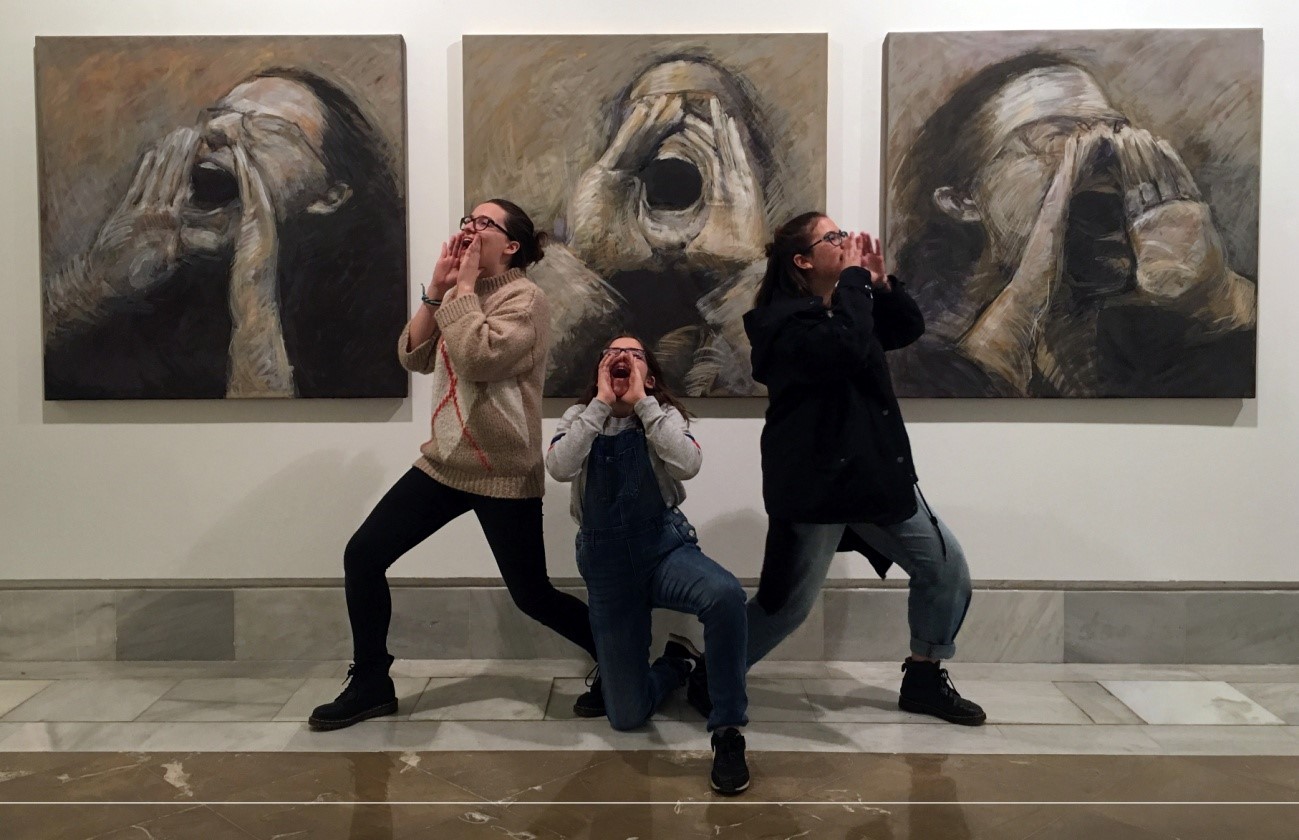 Entrevista a Marian López Fernández Cao sobre el papel de la educación artística y la reforma educativa